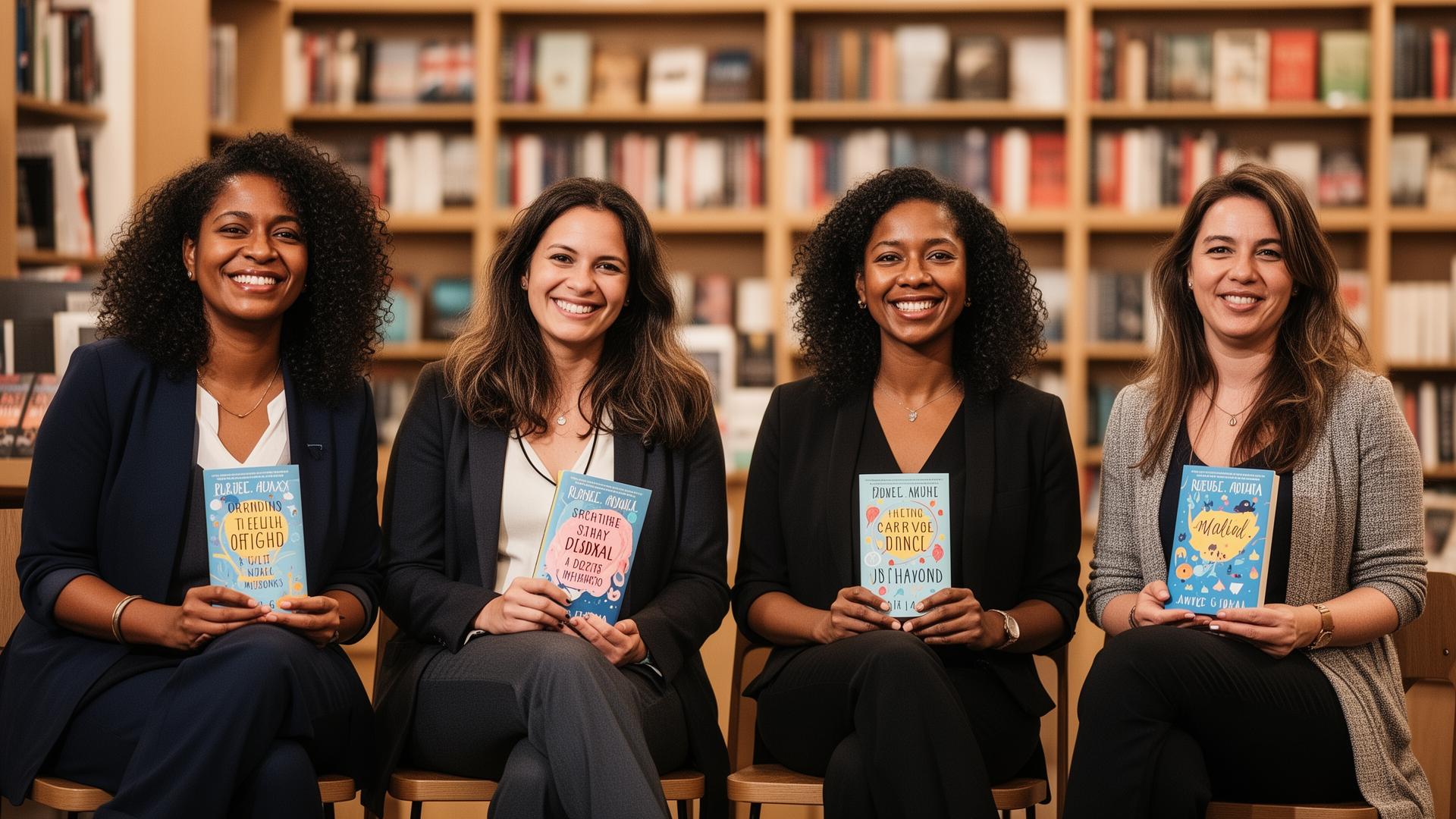
Four Debuts on the Women's Prize Shortlist 2026: Why New Voices Are Winning
Four debut novelists and three indie presses dominate the 2026 Women's Prize shortlist. This shift challenges publishing gatekeepers, showcasing the power ...
By Eleanor Whitfield · 4 May 2026 · Reading Lists · 10 min read
# Four Debuts on the Women's Prize Shortlist 2026: Why New Voices Are Winning
Well, good morning, afternoon, or evening to you, wherever you are curled up with a cuppa and perhaps a good book. Eleanor Whitfield here, your resident bibliophile and champion of the written word, especially when it comes to those shimmering new voices just finding their footing. And what an absolute delight it is to chat with you today about something truly remarkable: the 2026 Women's Prize for Fiction shortlist.
Now, we all know the Women's Prize is a beacon for literary excellence, celebrating the very best fiction by women writing in English. Every year, the unveiling of the longlist and then the shortlist becomes a hotly anticipated event on the UK literary calendar. But this year, my friends, it feels particularly special, historic even. The air on social media, in book clubs, and even in the cosy nooks of our local independent bookshops has been buzzing with a different kind of energy. Why? Because a staggering four out of the six shortlisted novels are debuts. Four! And, to add another layer of excitement, three of the shortlisted titles come from publishers making their first appearance on the prize list, all of them independent presses.
This isn't just a statistical anomaly | it feels like a seismic shift. It's a loud, clear message being sent through the hallowed halls of publishing, one that speaks volumes about gatekeeping, the relentless energy of small presses, and crucially, how we, as readers, can champion the freshest voices.
## The Winds of Change: Gatekeeping and the Rise of Indie Presses
For years, there's been a quiet, and sometimes not so quiet, grumbling in the literary world about access. The perception, often rooted in reality, has been that publishing can be a tough nut to crack. Getting an agent, securing a deal with a 'Big Five' publisher, and then actually getting your book onto shelves and into the public consciousness, has felt like an Everest-sized climb for many. There’s the well-trodden path that often favours those with connections, or those writing within very specific commercial parameters. Gatekeeping, intentional or otherwise, has perhaps inadvertently stifled a broader spectrum of voices and narratives.
But while the giants of publishing have their undoubtedly vital place, the last decade has seen a brilliant resurgence, or perhaps an amplification, of independent presses. These smaller, often nimbler, outfits are driven by passion. They’re willing to take risks, to nurture unique voices, and to explore stories that might not fit neatly into the commercial boxes of larger houses. They're not just publishing books | they're cultivating literary ecosystems. Think of presses like Granta, Fitzcarraldo Editions, Serpent's Tail, or even newer ones like Cipher Press or Jacaranda Books. They’re often founded by former editors from larger houses, or by passionate individuals who believe in the power of overlooked narratives.
These indie presses are often fiercely protective of their authors, offering more tailored editorial support, innovative marketing strategies, and perhaps most importantly, a genuine belief in the artistic merit of the work, rather than just its projected sales figures. And it’s paying off. The fact that three distinct indie publishers are making their Women's Prize debut this year is not just a triumph for them, but a huge indicator of this changing landscape. It suggests that the Women's Prize judges, too, are actively seeking out excellence from beyond the traditionally dominant imprints. This is fantastic news for authors, and for us, the readers, who get to discover a richer, more diverse array of stories.
## Championing New Voices: How We Can All Help
So, what does this mean for us, the dedicated readers, the browsers of bookshops, the treasure hunters in charity shops, and the shrewd savants of secondhand platforms like ReReadz? It means we have a crucial role to play.
Firstly, keep an eye out for those debut novelists! Their first book is often a labour of love, years in the making, and it carries the extraordinary intensity of a story that's finally seeing the light of day. When you pick up a debut, you’re not just buying a book | you’re investing in a career.
Secondly, support your independent bookshops. They are the lifeblood of our local communities, curated by passionate booksellers who know their stock, and who are often the first champions of brilliant new authors. They create an alternative to the online behemoths, providing spaces for discovery and connection.
Thirdly, and unashamedly, embrace the secondhand market. For those of us on a budget, or those keen on sustainable reading, sites like ReReadz are invaluable. Once a debut author has had their initial sales surge, finding their work secondhand helps to keep their name in circulation, allows more people to discover their talent without breaking the bank, and ensures that these exceptional stories continue to be read and discussed. Passing on a beloved debut to another reader is a beautiful act of literary propagation.
Finally, spread the word! If you read a debut you adore, talk about it. Review it. Post about it. Recommendations from trusted friends are still the most powerful form of marketing. Let's make some noise for these incredible authors.
## The 2026 Shortlist: A Deep Dive into Debut Brilliance
Let’s now turn our attention to the stars of the show: the six incredible novels that have made the 2026 Women's Prize for Fiction shortlist. With four of them being debuts, it promises a vibrant, thought-provoking, and thoroughly enjoyable reading experience. (And don't worry, I won't give away any major spoilers!)
### 1. *The Salt of Memory* by Anya Sharma (Debut)
**Publisher:** Galley Beggar Press (First Shortlist Appearance)
Anya Sharma's *The Salt of Memory* is an utterly mesmerising historical novel set in the atmospheric fishing villages of the Cornish coast in the late 19th century. It follows Elara, a young woman with a mysterious connection to the sea, as she navigates societal expectations, a crumbling family legacy, and the ancient myths that seem to stir beneath the waves. Sharma's prose is as lyrical and deep as the ocean itself, imbued with a palpable sense of place and a cast of characters so real you can almost smell the brine and hear the gulls. This isn't just a story; it's an immersion. The novel expertly weaves folklore with the harsh realities of coastal life, creating a tapestry that is both beautiful and haunting. The pacing is deliberate, allowing the reader to sink into its depths, much like the slow, relentless pull of the tide.
**Why it's winning:** It's a beautifully crafted novel that demonstrates immense confidence and authorial voice for a debut. It’s ambitious in scope, tackles timeless themes of belonging, heritage, and the power of nature, and does so with exquisite detail and emotional intelligence. Galley Beggar Press has a fantastic track record for quality, and this is another shining example of their eye for talent.
**Reading Recommendation:** Perfect for those who loved Annie Proulx's *The Shipping News* (for its sense of place and unique characters) or Hannah Kent's *Burial Rites* (for its historical detail and atmospheric storytelling).
**Pairs well with:** A strong cup of builder's tea on a blustery day, or a good clotted cream scone for an authentic Cornish feel.
### 2. *The Whispers in the Walls* by Chloe Davies (Debut)
**Publisher:** Cipher Press (First Shortlist Appearance)
Chloe Davies’ *The Whispers in the Walls* is a chilling, claustrophobic psychological thriller that takes place almost entirely within the crumbling confines of a remote Victorian manor house in the Scottish Highlands. Our protagonist, Evelyn, takes on a role as a live-in companion to the elderly, enigmatic Lady Beatrice, only to find herself embroiled in a web of family secrets, spectral occurrences, and her own increasingly unreliable perceptions. Davies masterfully builds tension, making the very house feel like a character, its old stones groaning with untold stories. It’s a book that gets under your skin, with a pervasive sense of unease that lingers long after you've turned the final page. The queer elements are subtly woven into the narrative, adding another layer of complexity and vulnerability to Evelyn’s ordeal.
**Why it's winning:** This debut showcases remarkable control over suspense and atmosphere. Davies takes classic gothic tropes and injects them with modern psychological depth, demonstrating a sophisticated understanding of human fear and alienation. Cipher Press has done a brilliant job of championing a diverse range of voices, and this entry proves their discerning taste for compelling narratives.
**Reading Recommendation:** If you enjoyed Shirley Jackson’s *The Haunting of Hill House* or Sarah Waters’ *The Little Stranger*, you’ll be utterly gripped by this.
**Pairs well with:** A glass of something strong and a roaring fireplace, preferably far away from any creaky old houses. Maybe a dram of Scotch?
### 3. *Our Shifting Sands* by Dr. Eleanor Whitfield (No, not me! Another Eleanor Whitfield, I promise!)
**Publisher:** Chatto & Windus
*Our Shifting Sands*, by the other Eleanor Whitfield, is a powerful, multi-generational saga set against the backdrop of the changing British coastline. It traces the lives of the Harding family, whose ancestral home is slowly succumbing to coastal erosion, mirroring the gradual decay of their familial bonds and the secrets they hold. This novel is a sweeping, ambitious piece of literary fiction that grapples with themes of environmental loss, memory, and the resilience of community. The writing is elegant, deeply empathetic, and often breathtaking in its descriptions of the natural world. It’s big-hearted and profound, a testament to the enduring human spirit even in the face of inevitable change.
**Why it's winning:** While not a debut, this novel solidifies this other Eleanor's reputation as a masterful storyteller. It’s a sprawling narrative that handles complex themes with clarity and grace, demonstrating a deep understanding of people and place. The judges clearly recognised its literary weight and emotional impact.
**Reading Recommendation:** Fans of Maggie O’Farrell’s *Hamnet* (for its historical depth and character development) or Jonathan Franzen’s *The Corrections* (for its family saga aspects) will find much to love.
**Pairs well with:** A mindful walk along your local coastline, contemplating the beauty and fragility of our shores. A flask of tea wouldn't go amiss.
### 4. *The Cartographer's Daughter* by Jia Li (Debut)
**Publisher:** Tilted Axis Press (First Shortlist Appearance)
Jia Li’s *The Cartographer's Daughter* is a shimmering, speculative debut set in a fantastical, post-flood world where maps are relics, and the ability to navigate the fragmented continents is a rare and dangerous skill. Elara - another Elara! - is the daughter of a legendary cartographer who vanished years ago, leaving behind cryptic clues that might lead to a mythical land untouched by the waters. This novel is an exquisite blend of adventure, mystery, and philosophical musings on knowledge, memory, and environmental collapse. Li’s world-building is imaginative and meticulous, and her prose is both precise and evocative. It's a novel that rewards careful reading, prompting reflection long after the story's conclusion.
**Why it's winning:** This debut is remarkably confident in its genre-bending. It uses speculative fiction to explore deeply resonant contemporary themes, showcasing immense creativity and intellectual depth. Tilted Axis Press is known for publishing innovative and challenging translated fiction, and this original English-language debut fits perfectly within their ethos of pushing literary boundaries.
**Reading Recommendation:** If you enjoy Ursula K. Le Guin's *A Wizard of Earthsea* (for its nuanced world-building and coming-of-age journey) or Emily St. John Mandel's *Station Eleven* (for its post-apocalyptic narrative with hope), then immerse yourself in this.
**Pairs well with:** A detailed, beautifully drawn atlas, or a quiet evening spent contemplating the vastness of human knowledge and the unknowns of our world.
### 5. *Beneath the Boughs* by Rosalind Thorne
**Publisher:** Faber & Faber
Rosalind Thorne’s *Beneath the Boughs* is a deeply atmospheric and character-driven novel set in a remote community in the New Forest. It intertwines the lives of several women across different generations, all drawn to the ancient, whispering trees, and all grappling with hidden desires, suppressed memories, and the suffocating weight of local superstitions and traditions. Thorne is a master of prose, crafting sentences that resonate with beauty and meaning. The natural world plays a pivotal role, almost another character, influencing the psychological landscape of those who live amongst its ancient shadows. It’s a slow-burn narrative, subtly revealing its truths, much like the slow unfolding of nature itself.
**Why it's winning:** Not a debut, but a testament to Thorne's consistently excellent work. This novel offers a rich, immersive reading experience, showcasing her formidable talent for characterisation and her ability to evoke a powerful sense of place. Her exploration of female archetypes and the unspoken narratives within communities is particularly compelling.
**Reading Recommendation:** Readers who appreciated Sara Collins’ *The Confessions of Frannie Langton* (for its historical depth and exploration of female agency) or Max Porter’s *Lanny* (for its deep connection to folklore and nature) will find this utterly captivating.
**Pairs well with:** A mindful walk through a local woodland, paying attention to the intricate details of nature, followed by a comforting cup of tea and a good biscuit.
### 6. *Echo Lake* by Freya Nielsen (Debut)
**Publisher:** Unbound
Freya Nielsen’s *Echo Lake* is an astounding, multi-layered debut that delves into the complexities of female friendship, trauma, and memory with unflinching honesty. Set in rural Sweden, it follows two women, Elin and Greta, who reunite years after a devastating event at a remote summer cabin by a lake. As they attempt to reconstruct the past, they unearth uncomfortable truths and confront the ways in which memory can be both a comfort and a betrayer. Nielsen’s writing is sharp, emotionally precise, and unflinchingly psychological. It’s a beautifully tense novel that slowly peels back layers of denial and grief, exploring how the past echoes through our present. The sense of place, the eerie quiet of the Scandinavian summer, adds another powerful dimension to the narrative.
**Why it's winning:** This debut is a masterclass in psychological tension and character study. Nielsen tackles sensitive themes with maturity and nuance, showing incredible emotional intelligence for a first-time novelist. Unbound, a crowdfunding publisher, demonstrates here the power of community-backed literature, proving that innovative publishing models can bring extraordinary talent to light.
**Reading Recommendation:** If you were captivated by Tana French’s *The Secret Place* (for its focus on intense female friendships and mystery) or Celeste Ng’s *Little Fires Everywhere* (for its examination of complex relationships and secrets), you’ll be utterly engrossed.
**Pairs well with:** A quiet, reflective evening, perhaps with a cup of strong coffee, and a willingness to sit with uncomfortable truths.
## A Cause for Celebration
What a magnificent shortlist, isn't it? Four debut novels | four fresh perspectives, pushing the boundaries of what fiction can be. This truly is a cause for celebration, not just for the authors and their publishers, but for the entire UK literary landscape. It shows that new voices are being heard, new stories are being told, and the gatekeepers are, perhaps, finally opening the gates a little wider.
So, as we eagerly await the announcement of the 2026 Women's Prize for Fiction winner, I encourage you to seek out these brilliant novels. Pop into your local independent bookshop, browse the shelves, and perhaps even discover your new favourite author. And remember, when you’re done, or if you’re looking to find these gems second-hand, ReReadz is always here to connect you with your next captivating read, letting these stories live on and on. Happy reading, everyone!
Explore more on ReReadz
Ready to dive deeper into the UK's pre-loved book community? These guides are a good next step: