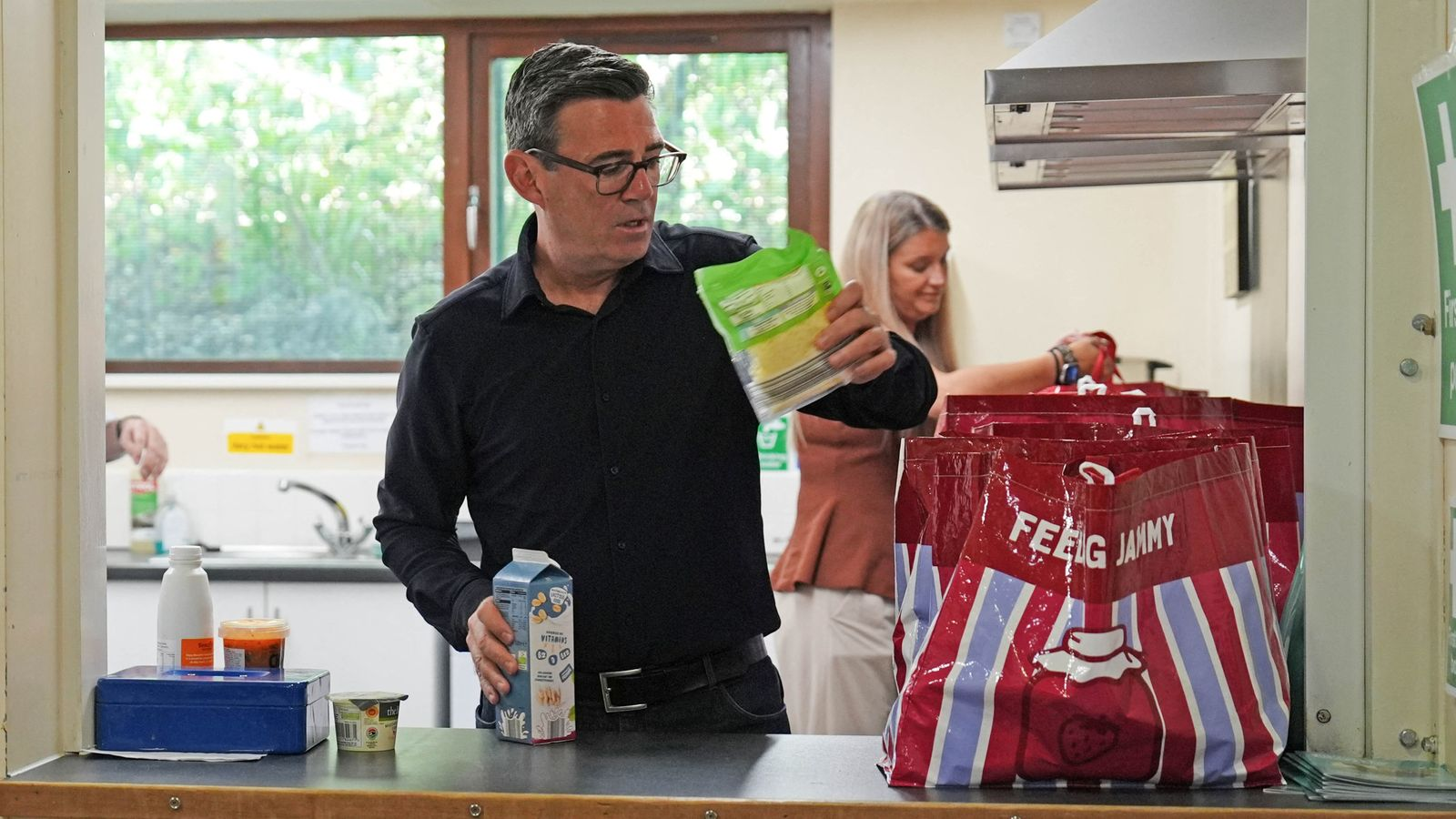
Andy Burnham became Prime Minister on 20 July, and Reuters, like every other outlet with a photographer on the pavement, covered the walk up to the black door. Whatever you make of the politics, a change at the top is one of the few moments when a country reads about itself on purpose. So here is a reading list rather than a verdict.
Leigh, Manchester, Westminster
The route matters to the story people tell about him. A childhood in Leigh, a constituency in the same part of Greater Manchester, a Cabinet career, then a deliberate exit from Westminster in 2017 to run a city region. For eight years the job was buses, trams, housing, policing and a running argument with central government about money. Then back to London, by a very different door.
You do not have to admire that arc to find it useful. Very few recent Prime Ministers arrived having spent most of the previous decade running something outside the capital. That is a real change in the raw material of a premiership, and it is worth understanding on its own terms.
Books about modern British politics and prime ministers
If you want to understand what the job actually is, rather than what campaigns claim it is, these are the second-hand shelves worth raiding.
- The Blunders of Our Governments by Anthony King and Ivor Crewe. A forensic, unpartisan look at how British government gets things wrong. Reads like a manual for anyone about to inherit it.
- Why We Get the Wrong Politicians by Isabel Hardman. On the machinery of selection, the Commons and the daily reality of the job. Consistently cited across party lines.
- The Prime Ministers by Steve Richards. Comparative portraits from Wilson onwards, useful precisely because it resists hero-making.
- The Diaries of Chris Mullin. The best account in print of what power looks like from the middle of it, which is where most of politics happens.
- Diane Coyle's GDP for anyone who wants to argue about the economy without arguing about a number they have not examined.
Northern identity and the north-south divide
The "King of the North" nickname was mostly a press invention, but it stuck because it named something real: a long-standing sense that decisions about the north are made elsewhere. The literature on this is far older and better than the headlines.
- The North (And Almost Everything In It) by Paul Morley. Sprawling, argumentative, personal. The best single book on northern self-image.
- The Road to Wigan Pier by George Orwell. Uncomfortable in places, still unavoidable, and set a few miles from Leigh.
- Pit Sense Versus the State by David John Douglass, or Jeremy Seabrook's writing on post-industrial towns, for the version told from inside.
- North and South by Elizabeth Gaskell. A Manchester novel about a southerner learning she understood nothing. It has aged remarkably well.
- Broken Heartlands by Sebastian Payne. A journey through changing seats, written from a different political vantage point to Morley, which is exactly why it is worth reading alongside him.
Devolution, regional inequality and political leadership
This is the least glamorous and most consequential section. Britain is one of the most centralised large economies in the developed world, and almost every serious book on regional inequality ends up in the same place: money and decisions sit too far from the places they affect.
- The Wealth of Nations reconsidered? Try Rachel Reeves's and other practitioners' policy writing sceptically, but read the economists first: Philip McCann's The UK Regional-National Economic Problem is the serious text, dry and worth it.
- Cities Are Good for You by Leo Hollis, for the case that urban regions, not nations, do the practical work.
- Bloody Nasty People and its descendants for how neglect turns into politics, though read them with the same scepticism you would apply to anything.
- The Blunders of Our Governments again, honestly. It belongs in both lists.
One thing devolution literature agrees on and political coverage rarely mentions: metro mayors have far less fiscal power than their profile suggests. A mayor who becomes Prime Minister inherits the other side of that ledger. Whether that changes anything is a fair question to argue about, not a prediction we are going to make.
What might this mean for readers?
Most governments do not think about readers as a constituency, but almost every domestic policy touches reading in some way. A mayor who spent years arguing for buses and trams may be more alert than most to the practical cost of getting to a library, or to the fact that a high street with an independent bookshop is a high street with a reason to visit.
The questions are worth asking rather than the answers asserting:
- Local libraries: council budgets have been under pressure for years, and library opening hours, staff and stock budgets vary enormously. A government serious about access to reading would have to put money back into the local institutions that actually provide it.
- Bookshops and high streets: business rates and rents have closed more bookshops than Amazon has. Any serious high-street policy either helps small retailers or it does not.
- Schools and literacy: reading for pleasure is one of the strongest predictors of adult outcomes, yet it depends on school libraries, trained librarians and time in the timetable. Those are spending decisions, not slogan decisions.
- Further and adult education: the route from Leigh to Westminster used to run through grammar schools and comprehensive ambition. If adult education and evening classes continue to shrink, that route narrows for the next generation.
- Access to the countryside of ideas: free museums, archives and local history collections matter to readers, writers and anyone who wants to understand where they live. They are rarely front-page news, which is why they are easy to underfund.
We are not saying any of this will happen. We are saying these are the places a reader should watch, because they are where a government either helps or hinders the habit of reading.
What could a Chancellor do for books?
Books are already zero-rated for VAT in the UK, which is one of the simplest ways a government can say that reading matters. That leaves other levers, and most of them are duller than a headline about a new Prime Minister but more consequential than one.
- Protect the zero VAT rate: it is not immutable. Any Chancellor who wants to raise revenue will look at every zero and reduced rate. Keeping books affordable is a choice that has to be made repeatedly.
- Public lending right: authors are paid a small sum when their books are borrowed from libraries. The rate per loan and the budget cap are fiscal decisions. A Chancellor who values writers should make sure the system keeps pace.
- Business rates relief: bookshops, especially independents, pay rates on the value of a high-street location that may no longer reflect their actual turnover. Targeted relief can be the difference between a shop staying open and a shop becoming a flats conversion.
- Creative industries tax relief: publishing is part of the wider creative economy. Tax reliefs for publishers, writers and translators are never the whole answer, but they do shape what gets commissioned, translated and kept in print.
- Copyright and AI: the question of whether books can be used to train generative AI without permission is the most urgent one for the trade right now. The next government will set the regulatory tone. Readers who want a market that still pays human authors have a stake in that.
- Research funding and archives: digitisation, library archives and scholarly access are not glamorous, but they determine whether obscure books remain findable. That matters to second-hand sellers, researchers and anyone who thinks the past should be searchable.
Any Chancellor can talk about culture. The test is whether they spend the boring money on the unglamorous infrastructure that lets readers and writers keep doing what they do.
What should Britain's new Prime Minister read?
Every new occupant of Number 10 is handed a stack of briefing folders and, if they are lucky, a few books that survive the first fortnight. If we were putting a small pile on that desk, it would be short: one book on how British government fails, one on how the north sees itself, one on regional economics, and one novel to keep the human scale in view. Gaskell would do. So would Saturday Night and Sunday Morning.
You will have a better list. That is rather the point.
Over to you
We are not here to endorse anybody. We sell second-hand books, and political books are among the most frequently re-read, most heavily annotated and most generously passed on titles in the trade. A first edition of a political memoir is often worth less than a well-thumbed paperback of a good history, and we think that is the correct order of things.
So: what would you put in front of a new Prime Minister? What could a new government actually do to help readers, libraries and bookshops? And which political book changed how you see this country? Tell us in the Reading Room, or list the ones you have finished with so somebody else can argue with them next.